
Battle of Gettysburg Buff
A website for Civil War
buffs interested in the
Battle of Gettysburg
















For Children
There are many interesting and fun things to do with your children, both on and off the
battlefield. Here are some of them:
In addition to learning about the many and unusual types of animals (see my "Something Different" page) that served as regimental mascots and/or looking for the monuments with animals depicted on them as you drive on the battlefield, the National Park Service normally has two specific programs for children that may be of interest to you and your family:The Junior Ranger Program – A program for children ages 5-13 to help them learn about the park and battle as they complete an interesting and fun-filled activity booklet.
Join the Army – A one-hour program for children ages 7-12 to help them learn what it was like to be a typical soldier during the Civil War.
Visit the National Park Service webpage at https://www.nps.gov/gett/learn/kidsyouth/index.htm for more information.
Walking Pickett's ChargeWhile walking the actual path of Pickett's Charge is often done by many buffs, it is also a good activity (and good exercise) for parents with children interested in hiking approximately 1 mile from Seminary Ridge to Cemetery Ridge. Obviously, to avoid having to retrace your steps back to your vehicle if you parked along West Confederate Avenue, coordinating your transportation or carpooling in some fashion will be necessary. Remember to take along an adequate supply of water, wear good headgear, use sunscreen, and as is the case for walking on any part of the battlefield, check for ticks afterward. I have walked Pickett's Charge starting at the Virginia Memorial, and have also done so by starting at the North Carolina Memorial (many troops from North Carolina under the command of Brigadier General Johnson Pettigrew in Lieutenant General A. P. Hill's III Corps participated in "Pickett's Charge"). Regardless of where you start from, you will surely gain a greater appreciation of the courage of the roughly 12,000 brave soldiers who did their duty despite the odds and terrific artillery fire that they endured almost as soon as they stepped out of the woods on Seminary Ridge.
The Rupp House “Children of Gettysburg – 1863” History CenterThe Rupp House “Children of Gettysburg – 1863” History Center, operated by the Gettysburg Foundation, is located at 451 Baltimore Street in downtown Gettysburg. It is a good starting place for first-time visitors and focused for children, including:
- Informed Imagination: Your journey through galleries like "Growing Up in Gettysburg 1863," "The Soldiers are Coming," "Surviving the Battle" and "Remembering Gettysburg" provides a history-based setting for creativity, discovery and learning.
- Hands-on History: Children of Gettysburg 1863 invites children (grades K-5) - and those young at heart - to touch and hold, seek and explore, create and inspire.
- Interactive Activities: Lift the soldier's equipment pack and feel the weight of what they carried. Find a place to safely hide during the battle. Stand on a podium to deliver the Gettysburg Address.
Admission to the Rupp House “Children of Gettysburg – 1863” History Center is free for children 12 years old or younger whenaccompanied by a paying adult. Although parking is essentially limited to metered locations on Baltimore Street, it is still a worthwhile place to visit. For more information, visit the webpage at https://www.gettysburgfoundation.org/rupp-house.
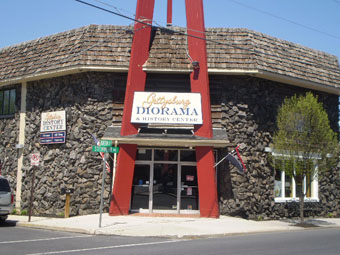
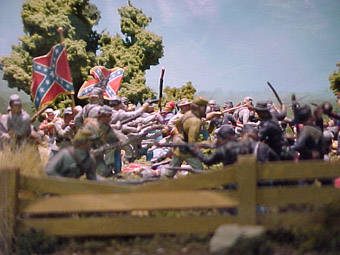
"Battlefield Diorama"The Gettysburg Battlefield Diorama, which was originally located at the Artillery Ridge Campground on Taneytown Road near Little Round Top, moved to a new home in early 2010 to the Gettysburg History Center at 241 Steinwehr Avenue in downtown Gettysburg. Approximately 800 feet in size and with 20,000+ handpainted figures and structures, the 35-minute light and sound presentation is well done. In addition, there are several display cases and a few smaller "box" dioramas which helped to provide a far more enjoyable time for me when I went there with my family than when I watched the 30-foot square "Electric Map" presentation at the National Park Service Visitor Center while on a fifth-grade field trip decades ago. In my opinion, the diorama is well worth a visit. For more information, go to http://www.gettysburgdiorama.com.
Make your own hardtackFor those families who are adventurous and have good dental coverage, you may want to try making and eating your very own hardtack. I did this once with my children a few years ago, and they even made it themselves. Not surprisingly, though, they did not enjoy eating it, but they developed a little better appreciation and understanding of what their great-great-great grandfather endured during the Civil War.
For whatever reason, I enjoyed trying it, and actually ate all that was left over even though it definitely lived up to its name. After doing some research, I found the recipe that I used (the original Union Army recipe) at the webpage http://www.kenanderson.net/hardtack/recipes.html:Army Hardtack Recipe
Ingredients:
* 4 cups flour (preferably whole wheat)
* 4 teaspoons salt
* Water (about 2 cups)
* Pre-heat oven to 375° F
* Makes about 10 piecesMix the flour and salt together in a bowl. Add just enough water (less than two cups) so that the mixture will stick together, producing a dough that won’t stick to hands, rolling pin or pan. Mix the dough by hand. Roll the dough out, shaping it roughly into a rectangle. Cut into the dough into squares about 3 x 3 inches and ½ inch thick.
After cutting the squares, press a pattern of four rows of four holes into each square, using a nail or other such object. Do not punch through the dough. The appearance you want is similar to that of a modern saltine cracker. Turn each square over and do the same thing to the other side.
Place the squares on an ungreased cookie sheet in the oven and bake for 30 minutes. Turn each piece over and bake for another 30 minutes. The crackers should be slightly brown on both sides.
The fresh crackers are easily broken but as they dry, they harden and assume the consistency of fired brick.
Remember, check your dental coverage first ...
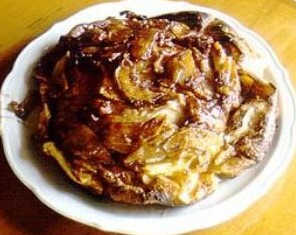
Speaking of foodHere is an interesting apple pancakes recipe from the Civil War era which was made with cornmeal, molasses, and minced apples. The ingredients are a little different from those used in any other old fashioned how to cook pancakes recipe.
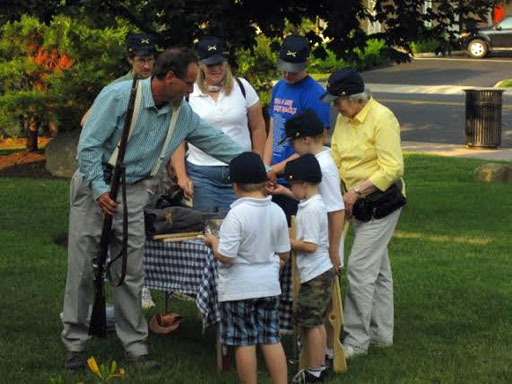
Speaking of hardtackSince 1999, American Stories Historic Walking Tours has been bringing Gettysburg's Civil War history to life through walking tours and interactive programs, all conducted by knowledgeable guides. Guides dressed in 1860's attire lead visitors through the Gettysburg Historic District; evening tours are available and conducted by candlelight. Tours last approximately 75 minutes and cover 6 to 8 blocks through the Gettysburg Historic District. A wide variety of customized tours and seated programs are available for visitors of all ages and interest levels. The most popular tour, "Memories of the Battle", brings to life the true stories of the town civilians in 1863 as they are surrounded by the famous battle. Other current or past tours and programs include:
"Enlist NOW!" An interactive soldier program allows children and adults alike to step back in time and “become” a Union soldier. Participants learn to drill, load and fire a black powder rifle, and see up close what the average soldier carried and learn how he spent his time in between battles (available most Saturday evenings in July and by appointment to groups of 10 or more).
"Civil War Fact or Fiction Tour" Try to figure out which of the Civil War trivia stories are true and which are false. Score cards and prizes are provided.
For more information on all the American Stories Historic Walking Tours and other programs, call (717) 624-8154 or email 1820farm@pa.net.
(Photo courtesy of American Stories Historic Walking Tours)
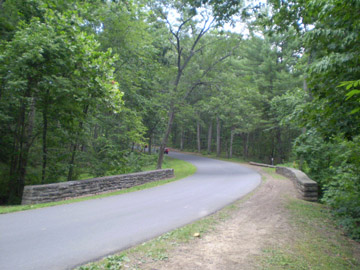
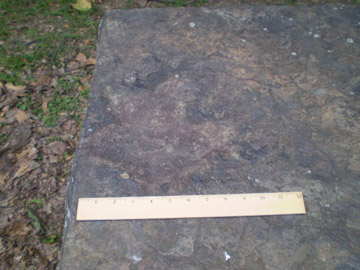
Dinosaur footprintsBelieve it or not, dinosaur footprints can be found on the battlefield, but since they are located on several of the stone slabs used to construct the top of the walls of the bridge over Plum Run on South Confederate Avenue as you approach the base of Big Round Top, countless visitors have driven right by them without even knowing of their existence. In addition, they can be very hard to see depending on the time of day and the amount of sunlight and moisture on them. Out of the 50 or so slabs (about 25 on each side) on the Plum Run Bridge, there are dinosaur footprints on about 5 of them. There is one easily visible footprint at the west end of the north wall (see the photo below on the right), and most of the other slabs contain many interesting impressions that are worth viewing even if they may or may not be dinosaur footprints:
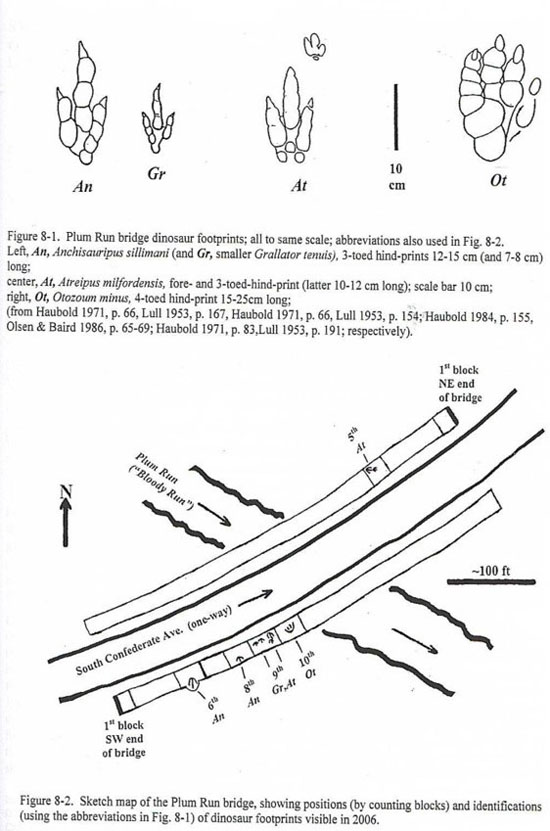
For more information on the exact location of the dinosaur footprints on the bridge over Plum Run, go to https://www.gettysburgdaily.com/gettysburg-dinosaur-footprints. Retired Pennsylvania State University Vertebrate Paleontologist Roger Cuffey constructed this map of the East Confederate Ave bridge over Plum road on the Gettysburg National Military Park showing the location of dinosaur tracks:
Gettysburg Museum of HistoryThe Gettysburg Museum of History, located at 219 Baltimore Street, contains approximately 4,000 artifacts and is one of the few remaining FREE Civil War museums in Gettysburg. It opened in 2009 and is worthwhile visiting for both children and adults alike. The museum contains an extremely unusual and fairly large collection of Battle of Gettysburg, Civil War, World War II, and other historical artifacts including one of the finest private collections pertaining to former President John F. Kennedy. For more information, go to http://gettysburgmuseumofhistory.com.
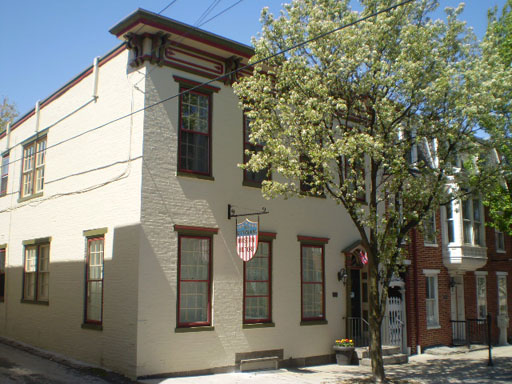
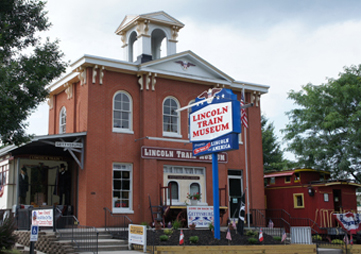
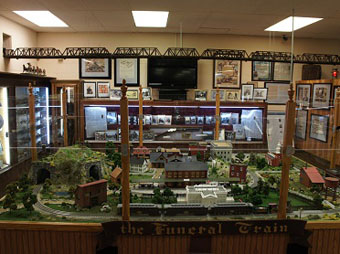
The Lincoln Train MuseumAnother great museum for both children and adults alike is the Lincoln Train Museum located at 425 Steinwehr Avenue. There are two miniature train layouts: the funeral train layout (enhanced by audio and video) operated by a museum attendant for visitors to experience the history of President Lincoln's funeral train journey from Washington, D.C. to Springfield, Illinois, and the second is an interactive layout that visitors can operate the trains and working features. There are also many interesting displays and artifacts pertaining to Abraham Lincoln, our founding fathers, and other great Americans. In addition, you can also board the full-size replica of the Lincoln Funeral railroad car, "The United States", for a simulated journey with the spirit of Abraham Lincoln as he shares his love of America with you. For more information, go to http://www.lincolntrain.com.
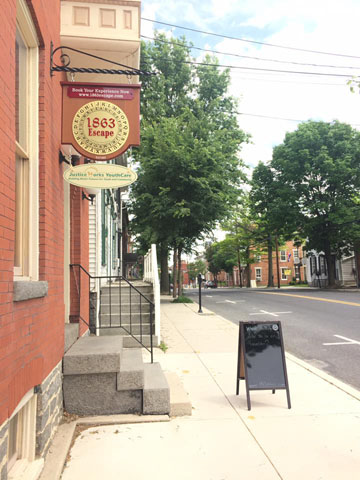
1863 Escape
One of the newest and unique Civil War-themed attractions in Gettysburg is “1863 Escape”, located at 344 Baltimore Street in downtown Gettysburg. “1863 Escape”is Gettysburg's first Civil War themed escape room experience that appeals to a wide range of audiences. You can be a history buff or a novice looking for an opportunity to solve a Civil War challenge within one hour. As the suspense, excitement, and intrigue build, you will work as a team using your communication skills, intuition, instinct, and logic. Along with your other team members, you will gather clues, solve puzzles, and hopefully become a Civil War “hero” before time runs out.
For more information, go to their website at http://www.1863escape.com or call (717) 420-2409.
(Photo courtesy of “1863 Escape”)
Copyright 2008. Randy Drais. All rights reserved.